The Bio-district Concept Recognized in the Tourism Development Strategy of the Republic of Serbia
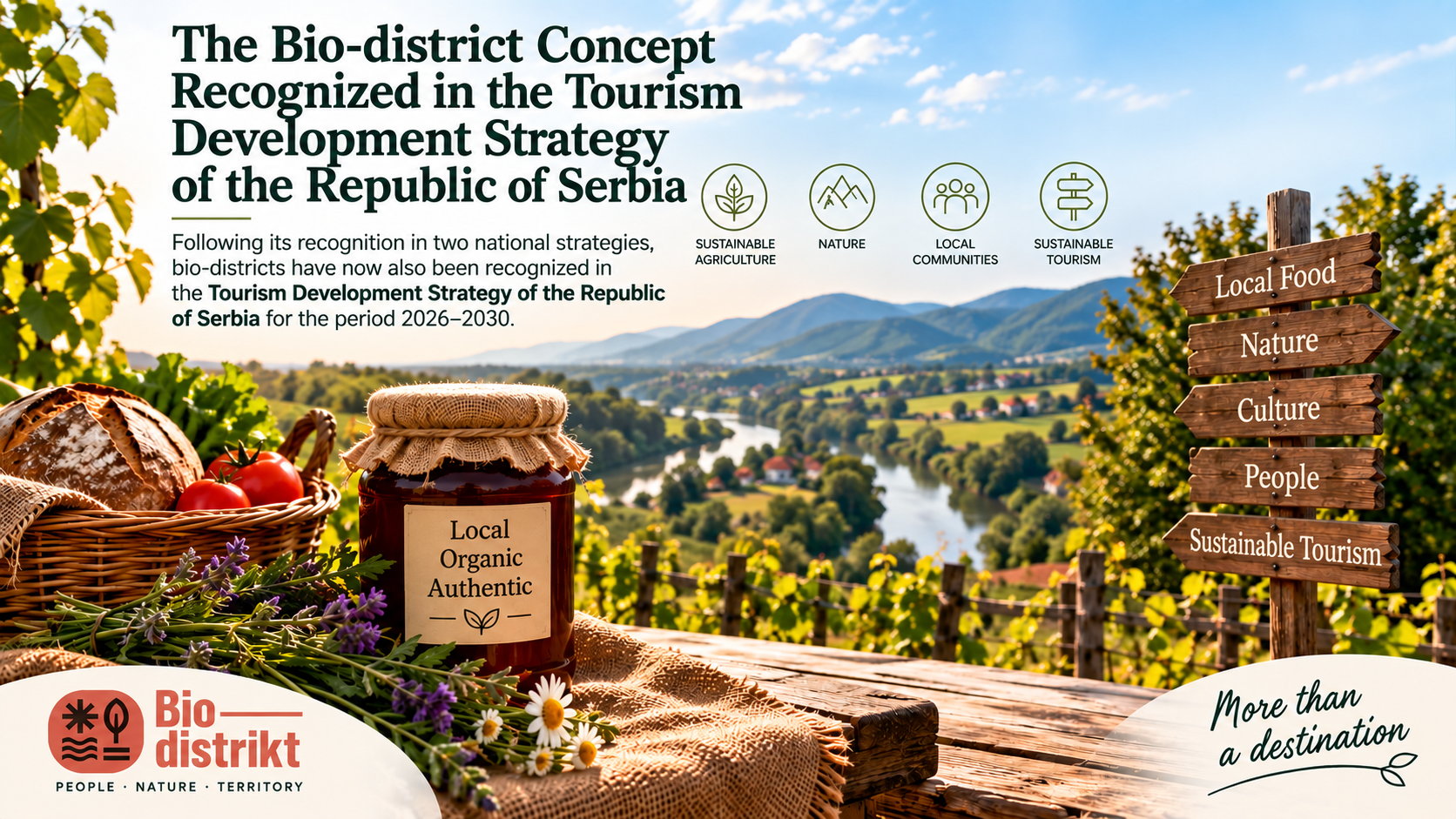
Following the recognition of the bio-district concept in two national strategies – the Strategy for Agriculture and Rural Development of the Republic of Serbia for the period 2026–2034 and the Environmental Protection Strategy of the Republic of Serbia until 2033 – Green Agenda for Serbia – bio-districts have now also been recognized in the Tourism Development Strategy of the Republic of Serbia for the period from 2026 to 2030.
The new Tourism Development Strategy recognizes bio-districts as an innovative model of integrated resource management focused on local economic development and based on the valorisation of the natural, cultural and social values of a particular area. Of particular importance is the Strategy’s explicit recognition of the need to develop and support the concept of “bio-districts” (eco-regions), as well as their role as an important tool for strengthening the sustainability and competitiveness of rural tourism and agritourism.
The Strategy also highlights the integrated nature of bio-districts, which bring together stakeholders and activities in organic and sustainable agriculture, tourism, environmental protection and local entrepreneurship. Such integration creates opportunities to improve the tourism offer, preserve biodiversity and increase economic benefits in rural areas.
Particular importance is also given to the role of bio-districts in connecting different sectors and stakeholders. Their further development in Serbia is recognized as an opportunity to improve coordination between the public, private and civil sectors, strengthen cross-sectoral cooperation, and position Serbia as a destination for responsible and environmentally sustainable tourism.
The recognition of the bio-district concept in three national strategies – covering agriculture and rural development, environmental protection and tourism – represents an important step towards its systematic and cross-sectoral positioning within Serbia’s national policies.
For Serbia Organica, which developed the national methodology for the establishment and operation of bio-districts, this represents an important recognition of the work carried out so far, as well as a strong incentive for the further development of the concept. The experience of the Kolubara Bio-district, the first bio-district in Serbia, demonstrates how this model can be applied in practice by connecting organic and sustainable agriculture, local producers and entrepreneurs, tourism, natural and cultural resources, and the local community.
The strategic recognition of bio-districts also opens up new opportunities for the further development of the Kolubara Bio-district and creates a more supportive framework for initiating and developing new bio-districts in other parts of Serbia.